Strategic partnership powering Elite Surgical's innovative bone graft solutions

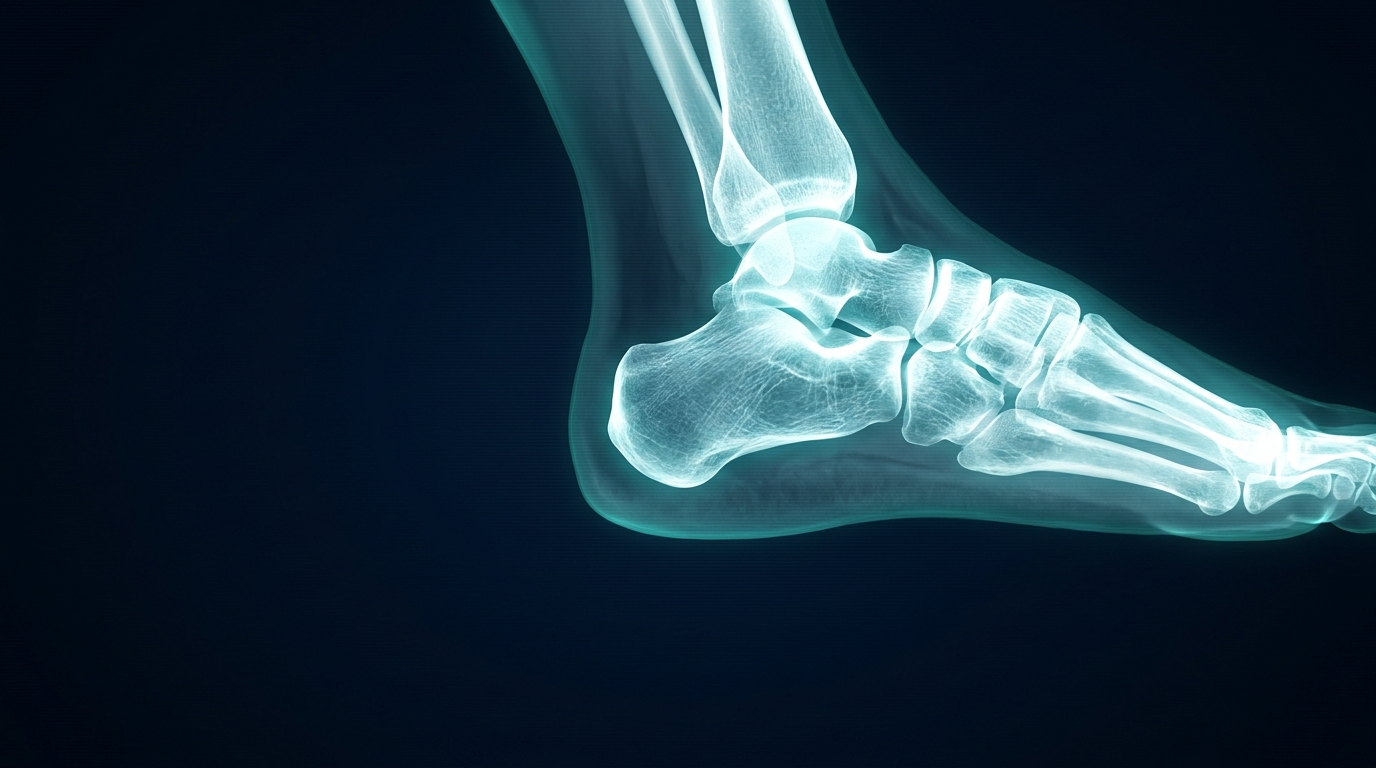
Ankle and hindfoot fusions ask a lot of a small joint: the surfaces must knit into one bone while carrying your body weight through recovery. ACTIFUSE packs the fusion site with an 80% porous mineral scaffold that your own bone grows through and replaces. Published experience in this anatomy includes a 24-patient tibiotalar arthrodesis series using silicate-substituted calcium phosphate.
Why You Can Trust Us
Our process
- 1Joint surfaces preparedCartilage removed down to bleeding bone, the foundation every fusion needs.
- 2ACTIFUSE fills the gapsMoldable formats shape to the joint contours; the MIS applicator reaches small corridors.
- 3Fixation holds it stillPlates or screws clamp the joint while bone grows across.
- 4Scaffold becomes boneThe graft resorbs as your own bone replaces it.
Why Choose Us
- No bone harvested from your hip or heel
- Anatomy-specific published experience: a 24-patient tibiotalar series using SiCaP
- Moldable formats fit small, irregular joint surfaces
- MIS applicator delivers into tight corridors, 0.5 mL per controlled squeeze
- In-OR case coverage across OH, MI, IN and Pittsburgh
Nonunion is the complication that turns one ankle surgery into two, and traditional grafting adds a second wound at the hip or heel to fix the first one. Smokers and diabetics, who make up a large share of hindfoot fusion patients, carry the highest nonunion risk and the most to lose from a harvest.
What patients ask before an ankle fusion
Bone graft not remodeling on follow-up CT
Your ankle fusion patient is six months out. The CT shows the graft sitting there, but it doesn't look like real bone. You're worried about a nonunion.
Not all synthetics remodel at the same rate. A graft with a highly porous, interconnected scaffold, like ACTIFUSE or ALTAPORE, is built to be replaced by host bone over time. Check your graft's resorption profile. If you need predictable remodeling, choose one with published fusion data for foot and ankle.
When can a patient walk after ankle fusion with synthetic graft
You just used a bone graft substitute for an ankle fusion. Your patient wants to know when they can put weight on it. You need a timeline that matches the graft's remodeling speed.
Weight bearing depends on fixation stability, not just the graft. With ACTIFUSE, the scaffold starts remodeling within weeks, but full load is typically allowed after 6-8 weeks if the construct is solid. Check your specific fixation and follow published protocols for tibiotalar fusion with this graft.
ACTIFUSE FLOW vs ACTIFUSE SHAPE for foot and ankle fusion
You are filling a defect during an ankle fusion. You have both the FLOW syringe and the SHAPE moldable graft on your shelf. You are not sure which one gives better handling and fusion for this case.
FLOW is ideal for narrow, irregular spaces because the syringe lets you inject it precisely. SHAPE is better when you need to pack a larger void and want the graft to stay in place without migrating. For a typical ankle fusion with moderate bone loss, either can work. Choose FLOW if you need to fill a tight gap; choose SHAPE if you need to build up a defect and contour it.
Bone graft for diabetic ankle fusion
Your patient has diabetes and a Charcot deformity. You need to fuse the ankle, but poor bone quality and high nonunion risk make graft choice critical.
Use a scaffold that remodels into real bone and can handle poor host biology. ACTIFUSE provides an 80% porous structure that the body replaces with living bone, without harvesting from the hip or heel. Published tibiotalar fusion series using this graft show reliable outcomes in compromised patients.
How much does a bone graft substitute cost for an ankle fusion
You are planning an ankle fusion. The cost of the bone graft substitute is a big part of the case budget. You need to know what to expect before you order.
The price depends on the volume of graft needed and the specific product. For a standard ankle fusion, a synthetic graft like ACTIFUSE typically costs less than using a bone graft harvested from the patient when you factor in OR time and donor site complications. Get a quote from your supplier for the exact product and volume.
When can a patient wear normal shoes after ankle fusion with synthetic graft
Your patient wants to know when they can ditch the surgical boot and wear regular shoes. You need a timeline that is realistic for a fusion using a synthetic graft.
Most patients can transition to a supportive shoe around 10 to 12 weeks after surgery, once X-rays show the fusion is solid. Synthetic grafts like ACTIFUSE remodel into real bone, so the timeline is similar to autograft. Always confirm healing on imaging before clearing the patient.
Trusted Partners
Foot & Ankle Fusion by area
The specific situations we handle in each area. Tap an area to see the full answers.

